
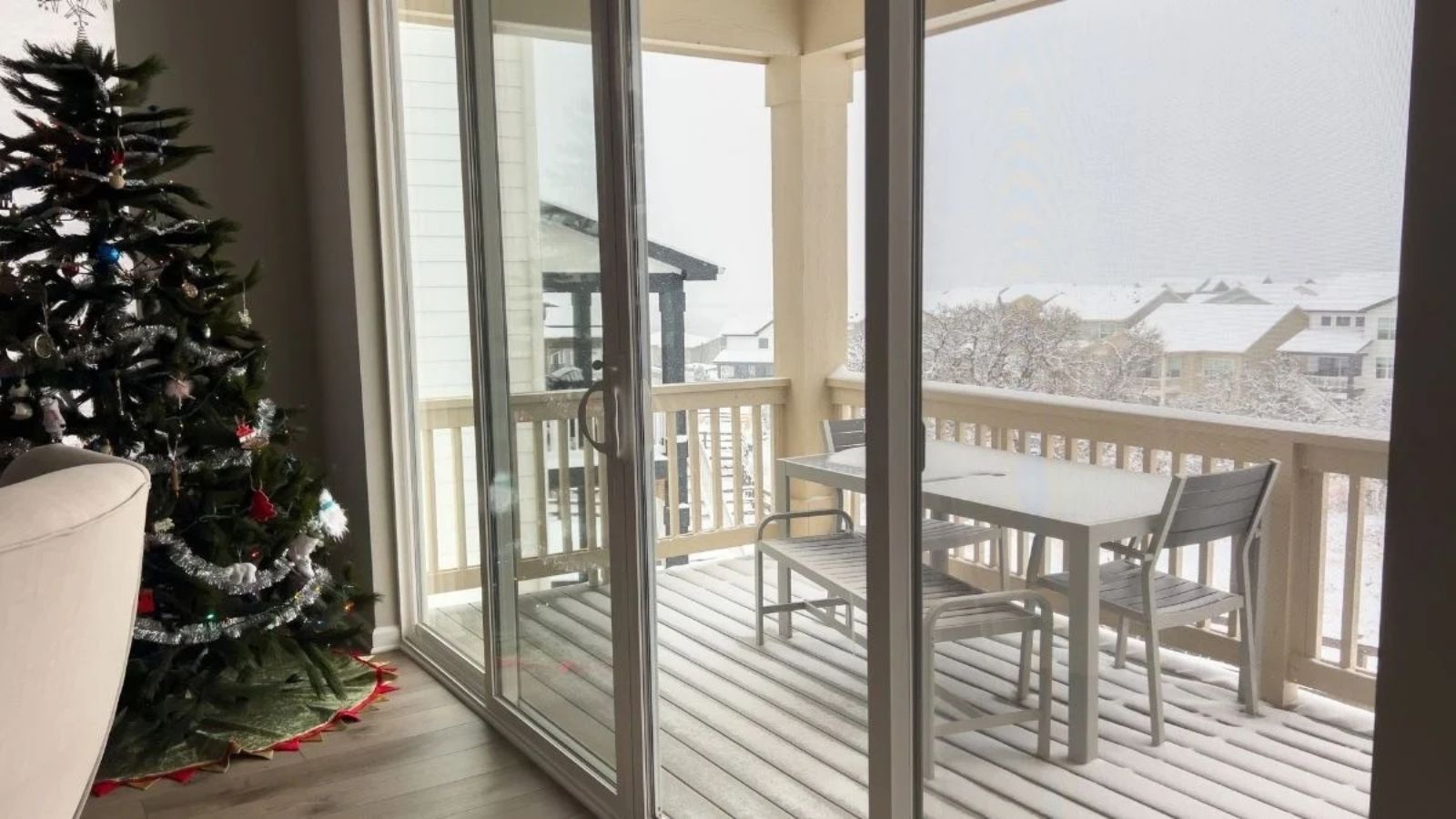
A sliding glass door can become difficult to open after a night of freezing temperatures. Pulling harder may damage the rollers, frame, or glass.
A frozen sliding glass door often has ice along the bottom track or around the weatherstripping. Identifying the obstruction helps you loosen it safely and determine whether ice or a mechanical fault is causing the problem.
Common Causes of a Frozen Sliding Glass Door
Moisture is a common cause of frozen doors. Water from condensation, rain, or melting snow can collect around the track and freeze when temperatures drop.
The location of the ice can help identify the problem. Ice along the bottom may block the rollers, while ice around the edges can bond the door to the frame.
Common causes include:
- Water trapped in the track: Debris or blocked drainage openings can prevent water from escaping.
- Frozen weatherstripping: Moisture around the seals can freeze and hold the door against the frame.
- Condensation: Moisture on cold surfaces can freeze overnight.
- Poor drainage: Repeated water buildup may indicate a drainage problem.
Inspect the track and frame edges before trying to open the door. If it freezes repeatedly in the same spot, investigate the moisture source.
Safe Steps for Unsticking the Door
Loosen the ice gradually rather than forcing the panel. Excessive pressure can damage the glass and moving hardware.
Follow these steps:
- Check the lock. Make sure the locking mechanism is fully disengaged.
- Clear the track. Remove loose snow, dirt, and debris with a soft brush or cloth.
- Apply gentle warmth. Hold a warm, damp cloth against accessible ice around the track or frame.
- Let the ice soften. Give the warmth time to work before testing the door.
- Test gently. Try sliding the panel a short distance. If it remains stuck, stop and check for remaining ice or obstructions.
Avoid pouring boiling water over the track. It can refreeze and create more ice, while sudden temperature changes can stress cold glass.
Do not strike the glass, pry the panel loose, or use a heat gun. If gentle warming does not release the door, seek professional help.
Signs of Ice Buildup or Hardware Problems
Not every sliding door that sticks in winter is frozen shut. Worn rollers, a damaged track, or alignment problems can also prevent smooth movement.
|
What You Notice |
Possible Cause |
Recommended Action |
|---|---|---|
| Ice along the bottom track | Frozen water blocking the rollers | Thaw gently and clear the track |
| Ice around the door’s edges | Frozen moisture near the seals | Apply gentle warmth |
| Door catches at the same point | Debris, track damage, or roller problems | Inspect the track and hardware |
| Door remains difficult to slide after thawing | Worn rollers or misalignment | Arrange a hardware inspection |
| Water repeatedly collects in the track | Blocked drainage openings | Clear accessible debris and investigate drainage |
If the door slides normally after thawing, ice was likely the immediate obstruction. Continued dragging or resistance may indicate a hardware problem.
Check whether the panel sits evenly in its frame. A crooked panel or a new gap along one edge can signal an alignment issue.
Risks of Forcing a Frozen Glass Door
A strong pull may seem like the quickest way to free a frozen door, but resistance can come from ice beneath the frame, frozen seals, or multiple obstructions.
Pulling hard on one side can damage the handle, rollers, or track. Glass also requires care because damaged edges or excessive stress can cause it to break.
Stop if you notice:
- A chip or crack in the glass
- A bent or distorted frame
- A panel that has dropped or shifted
- A lock that remains jammed after accessible ice has thawed
- Strong resistance despite gentle warming
Do not lift or remove a heavy glass panel without suitable equipment and assistance. A professional can determine whether the door needs repair, realignment, or replacement.
Winter Maintenance to Prevent Repeat Freezing
Routine maintenance helps keep water moving through the track and reveals problems before freezing weather makes them harder to address.
Before temperatures drop, check the following:
- Clean the track: Remove dirt, leaves, and debris that can trap moisture.
- Check drainage openings: Keep accessible drainage holes clear.
- Inspect weatherstripping: Look for torn, compressed, or missing seals.
- Check the rollers: Arrange adjustment or repair if the door already drags.
- Use appropriate lubricants: Follow the manufacturer’s instructions instead of applying household grease that can attract dirt.
If water continues to pool, investigate the drainage system. Persistent indoor condensation may also warrant checking humidity and ventilation.
Damaged seals, worn rollers, or a deteriorated frame may require professional attention rather than routine maintenance.
Preventing Damage and Restoring Door Function
Safely freeing a frozen sliding glass door starts with identifying the obstruction and allowing the ice to thaw gradually. If the door remains difficult to operate afterward, the rollers, track, or frame may need attention.
Discount Windows and Doors can help homeowners evaluate their options when a sliding glass door has persistent operating problems or damage requiring professional attention.
Frequently Asked Questions
Can a hair dryer melt ice around a sliding glass door?
A hair dryer is not the preferred method because water and electrical appliances create a safety hazard. Never use one near standing water or wet surfaces. A warm, damp cloth is a safer starting point for accessible ice.
Should you use a de-icing spray on the track?
Only use a product approved by the door manufacturer for the frame, seals, finish, and hardware. Some products can leave residue or damage certain materials, so check the manufacturer’s instructions first.
Can a sliding glass door freeze from the inside?
Yes. Indoor condensation can collect on cold glass, frames, and seals before freezing. Persistent moisture may indicate high humidity or insufficient ventilation.
Why does a sliding door freeze again after it has been thawed?
Water may remain trapped beneath the frame or around the rollers, allowing ice to form again. Blocked drainage openings can make the problem worse, so address the moisture source rather than repeatedly melting the ice.
Does a sliding glass door need replacement if it freezes every winter?
Not necessarily. Cleaning the track, correcting drainage problems, replacing damaged weatherstripping, or repairing worn rollers may resolve the issue. Consider replacement if the frame or glass is damaged or recurring problems cannot be resolved economically.
Discount Window and Door of Omaha – Local Window Replacement Company
At Discount Window and Door of Omaha, we are committed to providing the best quality doors and replacement windows. We employ the most skilled installers to ensure the highest standard of quality service. Our Omaha door and window installers are highly trained, certified industry professionals with years of experience, including some second- and third-generation employees.